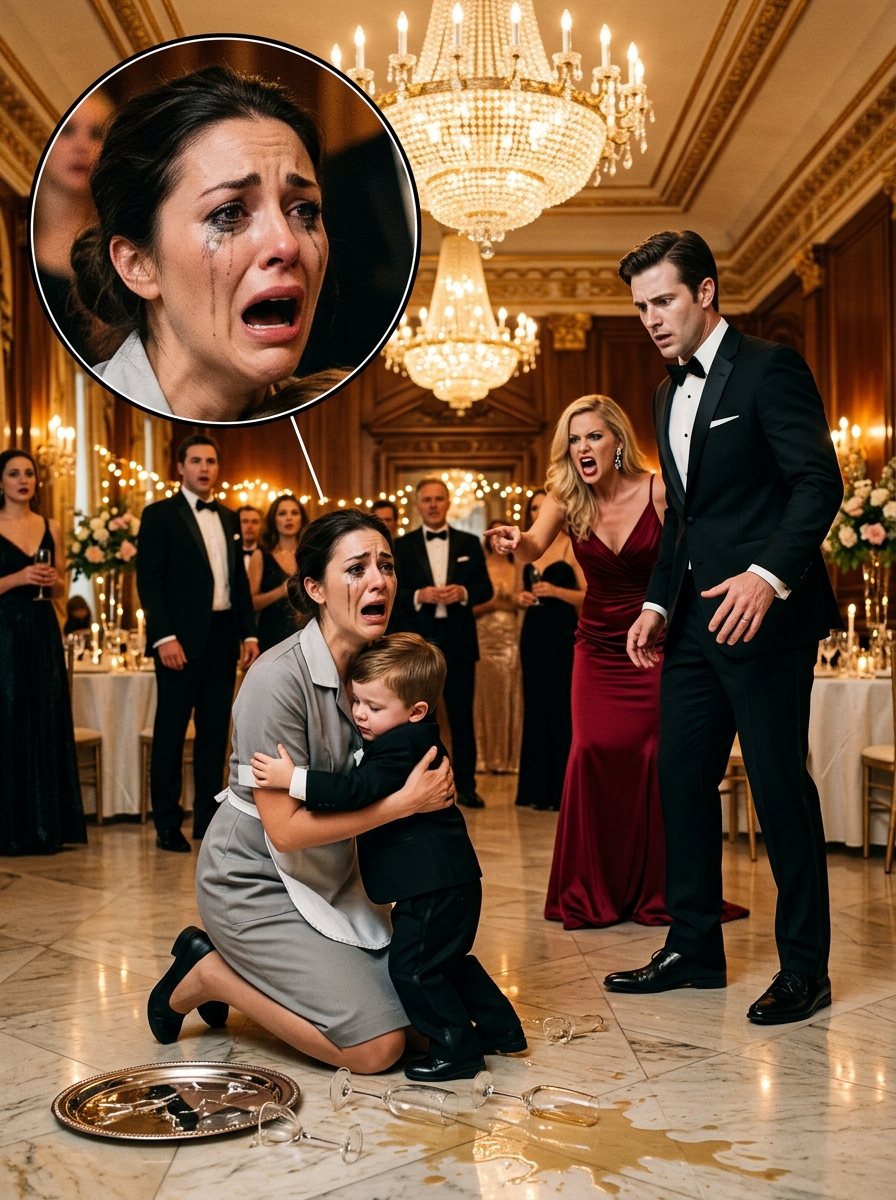
She had become an ally.
The caseworker came on a Thursday morning.
Her name was Ms. Pruitt, and she had a clipboard and tired eyes and the careful, neutral voice of someone who had seen too many homes go wrong.
Clara had cleaned the house until it shone. Margaret had baked. The children were dressed and fed and calm.
For an hour, it went well.
Ms. Pruitt watched Noah share his trucks with Grace. She watched both mothers move around the kitchen in an easy rhythm. She wrote things down and said little.
And then, near the end, she set down her pen and delivered the blow they had feared all along.
“I’ll be honest with you,” she said quietly. “What I see here is loving. But the law is the law. This placement was fraudulent, and until the judge rules, I’m required to bring the child into protective custody.”
She stood and reached for her bag.
“I’m sorry. I’ll need to take her today.”
The kitchen went silent.
Grace, who had been quietly stacking blocks at Noah’s side, looked up, sensing the shift the way children always do.
Clara moved before she even decided to.
She crossed the kitchen and lifted her daughter into her arms, and Grace, feeling the fear in the room, locked both little arms around her neck.
“Please,” Clara said. “Please don’t do this. She just learned she’s safe. She just started sleeping. If you take her now, you’ll undo everything.”
Ms. Pruitt’s face was kind, and that somehow made it worse.
“I don’t have a choice,” she said softly. “The order is signed.”
She stepped toward the doorway, and Clara backed away with Grace held tight, and that was when the little girl understood.
“Mama, NO!” Grace screamed, her arms clamping harder. “Don’t let her take me! Mama, please!”
And then a small body hurled itself between Clara and the caseworker.
Noah.
He stood with his arms thrown wide, his face red and streaming, his whole little frame shaking with fury and terror.
“You can’t!” he screamed. “She just came home! We waited TWO YEARS! You can’t take her, you can’t, you CAN’T!”
Margaret stepped beside Clara, and the two mothers stood shoulder to shoulder, a wall of grief and love no clipboard could cut through.
Clara sank to her knees, shielding both children with her body, and looked up at the woman in the doorway.
“I crawled out of a river for these babies,” she said, her voice breaking into pieces. “I cleaned floors for three months just to watch my son breathe. You will have to drag me out of this house first.”
Ms. Pruitt stopped.
The clipboard hung loose at her side, and for a long moment, the trained, neutral mask cracked, and underneath it was just a woman watching a family beg for its life.
“I have a court date,” she said finally, her voice unsteady. “Friday. Nine o’clock.”
She swallowed hard.
“I’m going to write that this is the most stable, loving home I have walked into in fifteen years. And I’m going to recommend the child stays here until the hearing.”
She looked down at Noah, still standing guard with his arms out.
“That’s the bravest thing I’ve seen a little boy do in a long time,” she said gently. “You keep protecting your sister, okay?”
Then she gathered her bag and let herself out, and the door clicked shut behind her, and the whole house collapsed into shaking, sobbing relief.
But the war was not won. It was only delayed until Friday.
They spent two days building their case with the lawyers.
Eleanor’s deathbed confession. The hospital records. The fisherman who pulled Clara from the reeds. The phone log of the call to the estate the morning after the empty casket was buried.
It was a mountain of proof. But a dead woman’s letter, the lawyers warned, could be challenged. They needed something living. Someone who had touched the crime with their own hands.
And on Thursday night, that someone called.
The phone rang at the big house just after ten, and Ethan answered to a voice he did not recognize, low and rough and full of something heavy.
“Mr. Caldwell,” the man said. “My name is Frank Doyle. Your mother paid me, two years ago. To take a baby out of a hospital ward in the dark.”
Ethan’s hand tightened on the phone until his knuckles went white.
“I’ve carried it every single day since,” the man went on. “I saw the news. I know that little girl is yours. And I’m done living with it. I’ll testify. I’ll tell the judge everything. The papers, the money, all of it.”