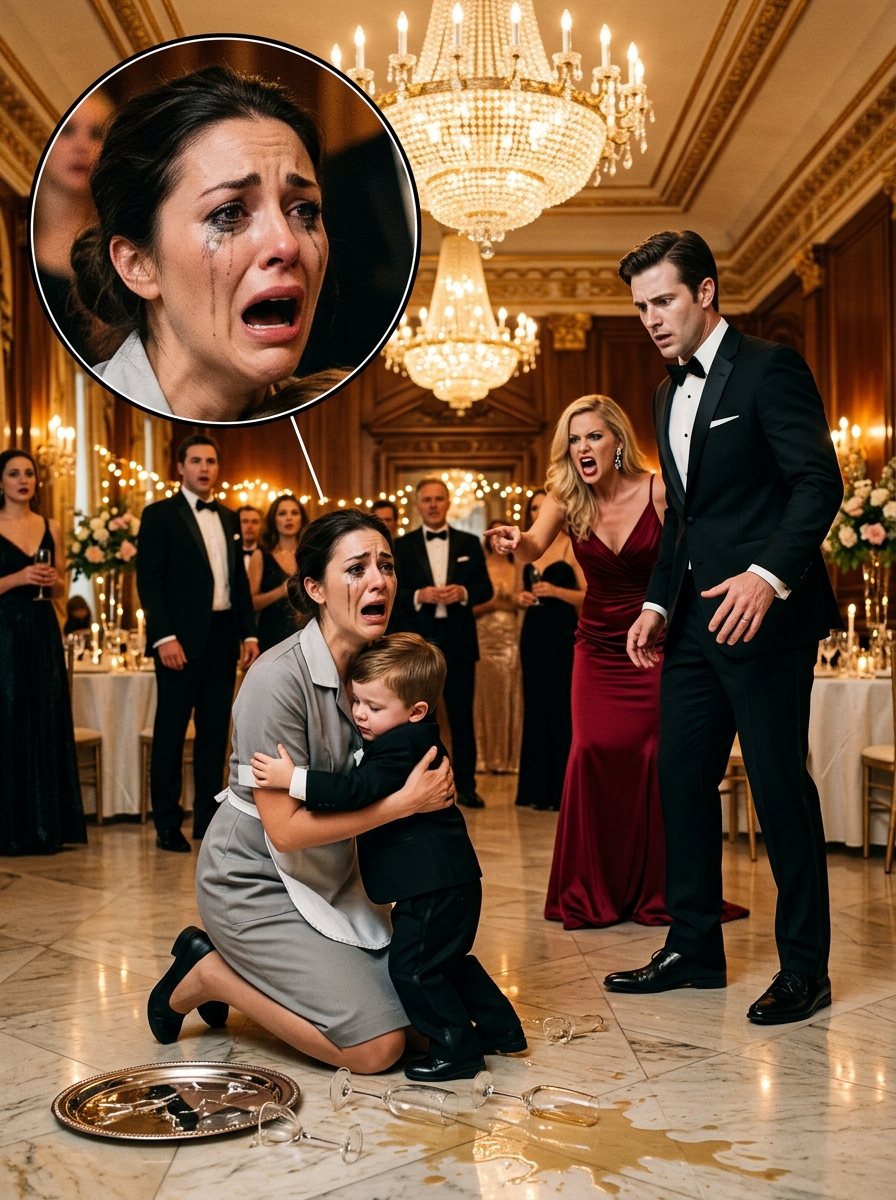
Part 8 is finally here, and I need you to hold someone you once swore you’d never forgive, because this is the chapter where the past walked back up the Caldwell driveway in a pair of broken shoes.
Three springs had passed since the afternoon Frank Doyle nearly died in the garden, and the estate had settled into a rhythm so gentle that Clara sometimes forgot to brace for the next storm.
Noah was seven now, all knees and questions, still appointing himself the guardian of everyone smaller than him.
Grace was five, with dark curls down her back and two mothers who braided them in turns.
And little Eleanor, the baby they had named to scrub a poisoned name clean, was three and fearless, toddling after her big brother through the daffodils.
Margaret still lived in the cottage with the blue shutters. Frank and Diane and the granddaughter filled the second cottage past the orchard. Coffee on the back terrace had become a kind of church.
It was the most ordinary, most beautiful life Clara had ever dared to want.
Then, on a Tuesday evening in late April, the rain came hard, and headlights swung crooked through the gate.
Clara was at the front window when the car coughed, sputtered, and died halfway up the long gravel drive.
For a long moment, no one got out.
Then the driver’s door opened, and a woman stepped into the downpour, thin as a reed, hunched against the cold, fumbling with something in the back seat.
When she straightened, she was holding a child.
Clara went to the door before she knew she had moved, and she pulled it open into a wall of rain and wind.
The woman came up the steps slowly, soaked through, her hair plastered to a face that had once been famous in this house.
And Clara stopped breathing.
Because she knew that face.
It was older now, hollowed out, the elegance scraped away by something hard. But the eyes were the same.
They were the eyes that had looked at her across a marble hall three years ago and called her the help.
“Vanessa,” Clara whispered.
Vanessa Hale stood on the steps of the house she had once expected to rule, holding a feverish little boy against her chest, and she could not meet Clara’s gaze.
“I’m sorry,” Vanessa said, her voice barely rising above the rain. “I had nowhere else. I drove for six hours. I didn’t have anywhere else to go.”
The child in her arms whimpered and turned his face into her neck, and Clara could see even from the doorway that he was burning up.
For one suspended heartbeat, every cruel thing this woman had ever done rose up in Clara’s chest like a tide.
Get that child away from the help. This is humiliating.
The champagne flute trembling in those manicured fingers. The way Vanessa had walked out of this house in diamonds while a little boy sobbed into a gray uniform.
Clara had every right in the world to close that door.
And Vanessa, somehow, knew it.
The woman’s knees buckled, and she sank down onto the wet marble of the threshold, still cradling the boy, her shoulders shaking.
“I know what I called you,” she wept. “I know what I was. I looked right through you, and I dressed it up as breeding, and I called it being better than the staff.”
She lifted her face, and the rain and the tears ran together.
“And then I heard. People talk, even now. They say the Caldwells take in the lost. The rival mother. The man who stole the baby. They say nobody gets thrown away at that house.”
Her voice cracked clean in two.
“He’s so sick, Clara. His fever won’t break. I have no money, no insurance, no one. I am the last person on this earth who deserves to knock on your door. But he’s not. He’s just a little boy. Please.”
Clara stood frozen, the storm howling at her back.
And then, from the top of the grand staircase, a small voice came down through the dark.